
Legal basis
The primary legislation governing forest access in Poland is the Act on Forests of 28 September 1991 (Ustawa o lasach, Dz.U. 1991 nr 101 poz. 444, as amended). Article 26 of this Act establishes that state forests are generally open to the public — walking on forest roads and paths does not require a permit. However, the same article grants forest districts (Nadleśnictwa) the authority to close specific areas, either permanently or temporarily, for management or safety reasons.
National parks operate under separate legislation — the Act on Nature Conservation of 16 April 2004 (Ustawa o ochronie przyrody) — and establish their own rules through management plans and regulations issued by each park authority. In national parks, visitors are typically required to keep to marked trails.
What is permitted in state forests
Under the Act on Forests, the following activities are generally permitted without a separate authorisation in state forests:
- Walking on forest roads, paths, and unmarked terrain (unless closed)
- Collecting mushrooms, berries, and other non-timber forest products for personal use
- Cycling on designated forest roads (those not closed to cyclists)
- Cross-country skiing on unmarked routes during winter
Lasy Państwowe operates an online map (Mapa Turystyczna Lasów Państwowych) identifying areas open to cyclists and horse riders, closed management zones, and marked recreational routes. This resource is available at lasy.gov.pl.
What is prohibited
Activities prohibited by the Act on Forests in state forests include:
- Lighting fires outside designated fire sites (ogniska)
- Driving motor vehicles off designated roads without authorisation
- Camping outside designated camping areas
- Damaging trees, breaking branches, or removing bark
- Dumping waste of any kind
- Entry to posted closed areas (obszary zamknięte)
- Hunting without a valid hunting licence and within a designated hunting district
Penalties for violations are set out in the Act and range from administrative fines to criminal liability for more serious offences such as deliberate arson.
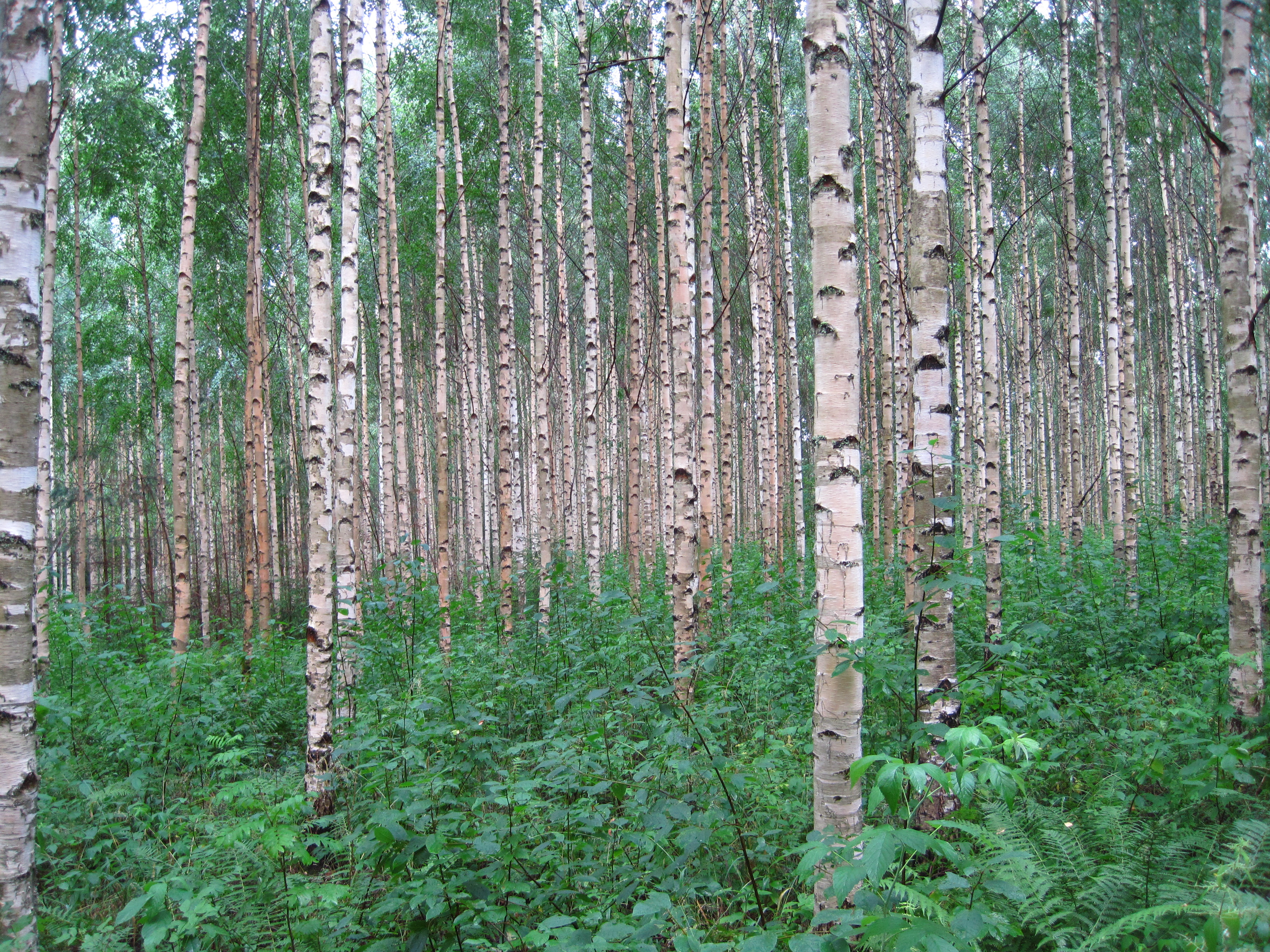
Conduct in birch groves specifically
Birch groves frequently appear at the edges of managed forest blocks, alongside clearfells, and in riparian buffer zones. These transitional habitats attract ground-nesting birds during spring. The following practical considerations apply when moving through birch stands:
- During the ground-nesting season (roughly April through June), keep to established paths to avoid disturbing nesting lapwings, skylarks, and wood warblers.
- Avoid removing or collecting birch bark from living trees. Bark stripping weakens trees and creates entry points for disease.
- Where sap collection is practised, seal any tap holes after use (see the sap collection guide).
- Birch groves on sandy soils are susceptible to compaction from off-trail foot traffic in wet conditions; repeated use of informal shortcuts accelerates erosion.
Fire safety in and around birch stands
Poland experiences significant forest fire risk during dry spring and summer periods, particularly in lowland regions with sandy soils and proximity to agricultural land. Birch groves on drier sites are susceptible to ground fire spreading through leaf litter and herbaceous vegetation beneath the canopy.
The Act on Forests prohibits lighting open fires within 100 metres of a forest edge except at designated fire sites. Forest districts post fire danger level information at forest entrances during high-risk periods; current danger levels are also published through the State Forests information system.
Smoking is prohibited in forests during periods of elevated fire risk, as declared by the relevant forest district.
Rules in national parks containing birch
Several Polish national parks have significant birch components:
- Białowieża National Park — strict protection zones require guided entry; birch occurs in transitional and riparian zones. Park authority: Białowieski Park Narodowy.
- Bory Tucholskie National Park — birch is common in heath-forest transition zones. Walking is restricted to marked trails.
- Roztocze National Park — birch occupies secondary stands on former agricultural land within the park. Entry rules apply to the entire park territory.
Each national park publishes its own visitor regulations. These are available at park visitor centres and on the respective park authority websites.
References
- Lasy Państwowe — lasy.gov.pl
- GDOŚ — gdos.gov.pl
- Ustawa o lasach z dnia 28 września 1991 r. (Dz.U. 1991 nr 101 poz. 444, ze zm.)
- Ustawa o ochronie przyrody z dnia 16 kwietnia 2004 r. (Dz.U. 2004 nr 92 poz. 880, ze zm.)