
Biology of birch sap flow
Birch sap is the dilute aqueous solution that moves upward through the xylem of a birch tree when soil temperatures rise above freezing but before leaf buds break. The flow is driven by root pressure — a positive pressure generated by osmotic activity in root cells — not by the suction created through transpiration as occurs later in the growing season.
The sap contains primarily water (typically above 95%), with dissolved sugars, amino acids, minerals including potassium and manganese, and trace amounts of organic acids. Its sugar content is considerably lower than maple sap, making it unsuitable for syrup production at typical concentrations without significant volume reduction.
The collection season in Poland
In Polish lowland conditions, sap flow begins when daytime temperatures consistently reach around 5–10°C while nights remain below freezing, and soil at depth starts to thaw. In central Poland (Mazovia, Łódź region) this typically falls in late February to mid-March, though the exact dates shift from year to year depending on winter duration.
Flow stops abruptly when leaf buds open, which marks the switch from root-pressure-driven flow to transpiration-driven water movement. The active collection window is therefore narrow — in some years as brief as two to three weeks, in others extending to five or six weeks.
Collectors who tap too late in the season often find the sap becomes milky or slightly bitter as leaf expansion accelerates, indicating reduced quality.
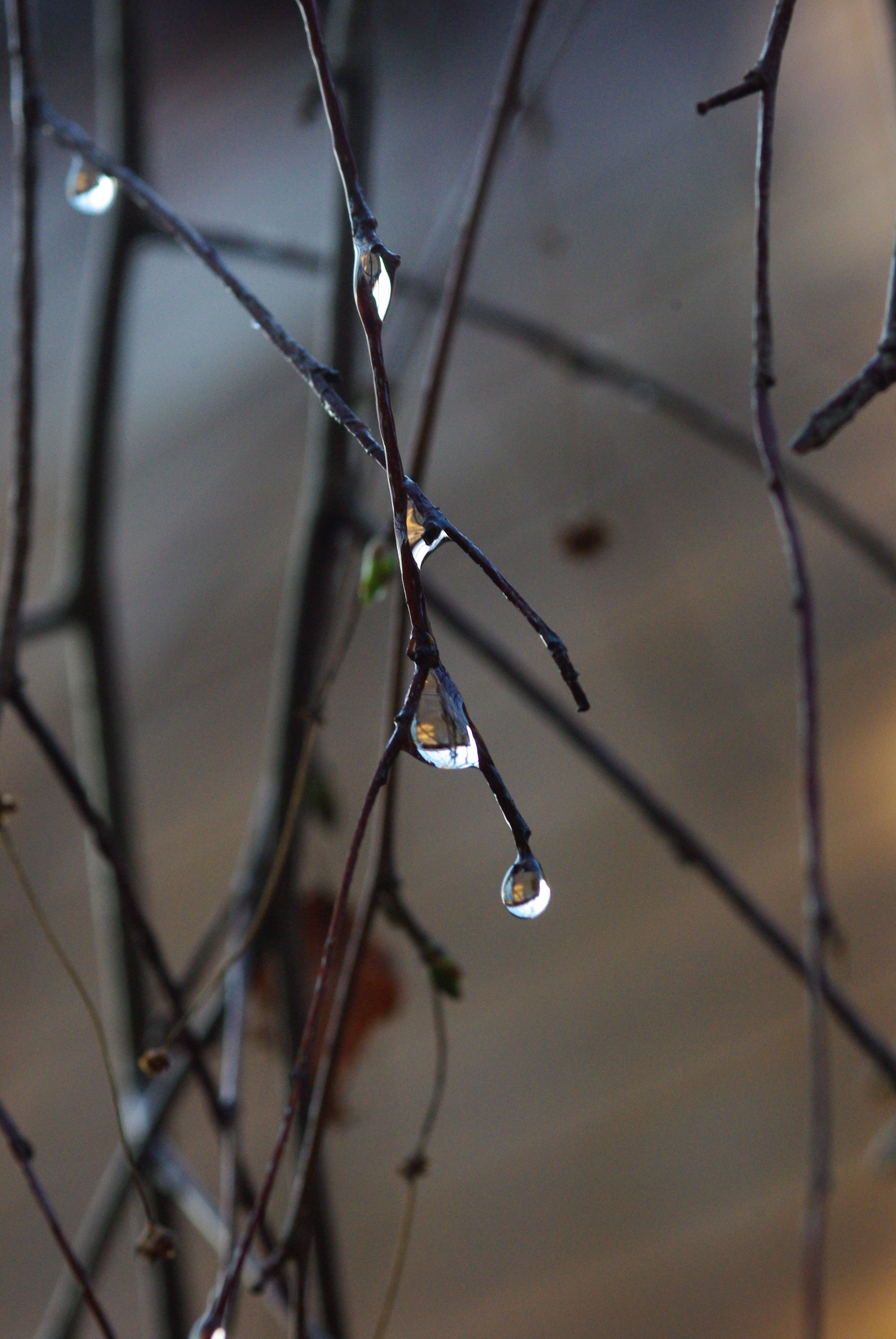
Tapping methods
The most common approach in Poland involves drilling a small hole — typically 8–12 mm in diameter — into the xylem of the trunk at a slight downward angle, at a height of roughly 0.5–1.0 m above ground level. A plastic tube or hollow reed is inserted into the hole, directing flow into a container below.
Alternative methods include making an angled cut into a lower branch and attaching a collection vessel beneath the cut. Branch tapping is generally less productive per tree than trunk tapping but considered less intrusive on the tree's long-term structure.
Post-collection wound care
After collection ends, the hole or cut should be sealed with a wooden plug or grafting wax to reduce the entry point for fungal pathogens and wood-boring insects. Unsealed holes on birch are vulnerable to colonisation by Phytophthora species and bracket fungi over time, though healthy adult trees with a single tap point typically recover without significant lasting damage.
Legal considerations in Poland
Collection of birch sap in Poland is governed by the Act on Forests of 28 September 1991 (Ustawa o lasach) and related regulations. In state forests managed by Lasy Państwowe, the general rule is that individuals may collect forest products — including mushrooms, berries, and sap — for personal use without charge. Commercial collection requires a separate agreement with the relevant forest district office (Nadleśnictwo).
Key points:
- Personal use collection is permitted without payment in state forests unless the forest district has specifically restricted it in its management plan.
- Commercial or wholesale collection requires written authorisation from the Nadleśnictwo concerned.
- Collection is not permitted in areas designated as reserves (rezerwaty przyrody) without specific authorisation from GDOŚ.
- In national parks, all forms of collection are subject to the park authority's regulations; most prohibit it entirely in core protection zones.
Verify current rules with the relevant Nadleśnictwo before beginning any collection. Contact information for each forest district is available on the Lasy Państwowe website.
Preservation and storage
Fresh birch sap has a short shelf life at ambient temperatures — bacterial fermentation begins within a day or two. Standard preservation methods include:
- Refrigeration: Extends usability to around five days at 2–4°C.
- Fermentation: Controlled fermentation with wild or added yeasts produces a mildly alcoholic beverage (oskoła fermentowana). This traditional preparation is documented across north-eastern Poland and the Baltic region.
- Freezing: Frozen sap retains its composition for several months. Ice crystals form at varying temperatures depending on dissolved solids; the concentrate remaining after partial freezing is sometimes consumed separately.
- Heat pasteurisation: Heating to approximately 80°C for a short period, combined with airtight bottling, extends shelf life but alters the flavour profile slightly.
References
- Lasy Państwowe — lasy.gov.pl
- GDOŚ — gdos.gov.pl
- Ustawa o lasach z dnia 28 września 1991 r. (Dz.U. 1991 nr 101 poz. 444, ze zm.)
- Łukasiewicz, S. (2012). Tradycyjne użytkowanie lasu w Polsce. Instytut Dendrologii PAN.